
Keep the Accessible Route in Your Winter Plan
Begin with the route people actually use to reach an accessible door, including parking, drop-off points and ramps. A cleared main staircase does not help someone who cannot use it. Consult the property’s exist
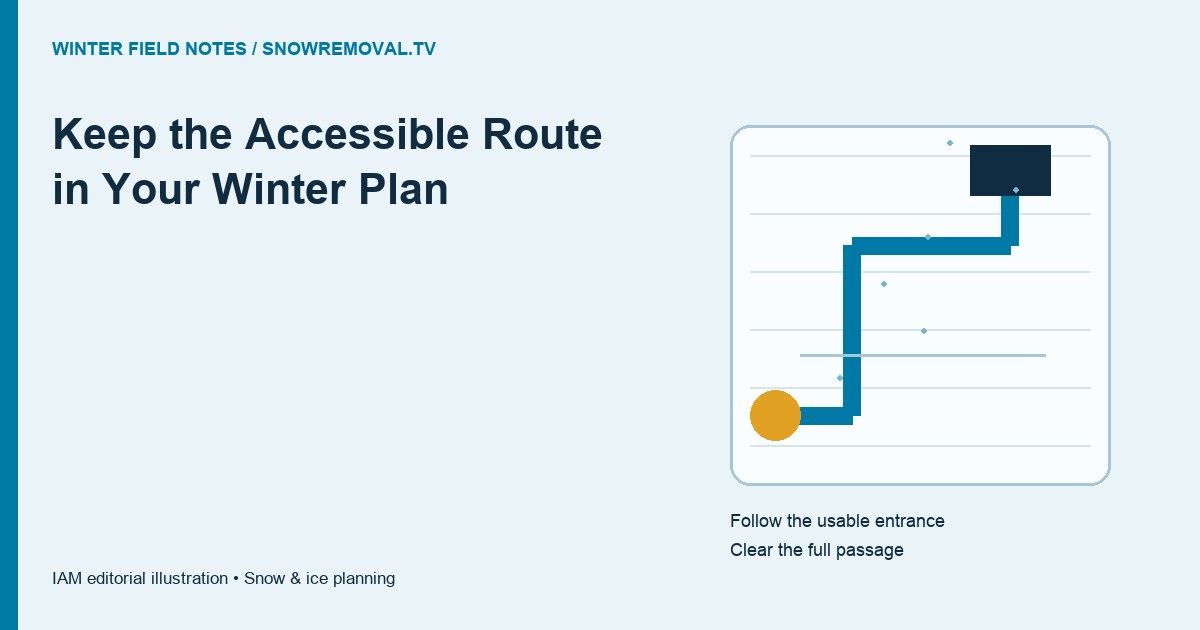
Begin with the route people actually use to reach an accessible door, including parking, drop-off points and ramps. A cleared main staircase does not help someone who cannot use it. Consult the property’s existing accessibility information and ask users or management where winter obstructions have occurred.
Check transitions at curb ramps, landings and door swings. Avoid leaving a narrow channel between piles where a mobility device cannot pass or turn. Confirm the required route dimensions with the responsible manager rather than guessing from a visual inspection. Keep drainage and tactile surfaces in the discussion.
A plow, delivery or public-road service can place snow back across a previously cleared route. Include those crossing points in follow-up inspections. Record who is responsible for checking them and how an obstruction is reported. Give visitors a clear alternative only when it has actually been verified as usable.
Put the accessible route on the provider’s first-service plan and the property’s internal checklist. Share changes promptly, particularly if a door or lift becomes unavailable. Record observations and corrective actions without identifying individual residents. Review the plan with appropriate accessibility expertise where needed.