What Causes Ice Dams on West Coast Homes?
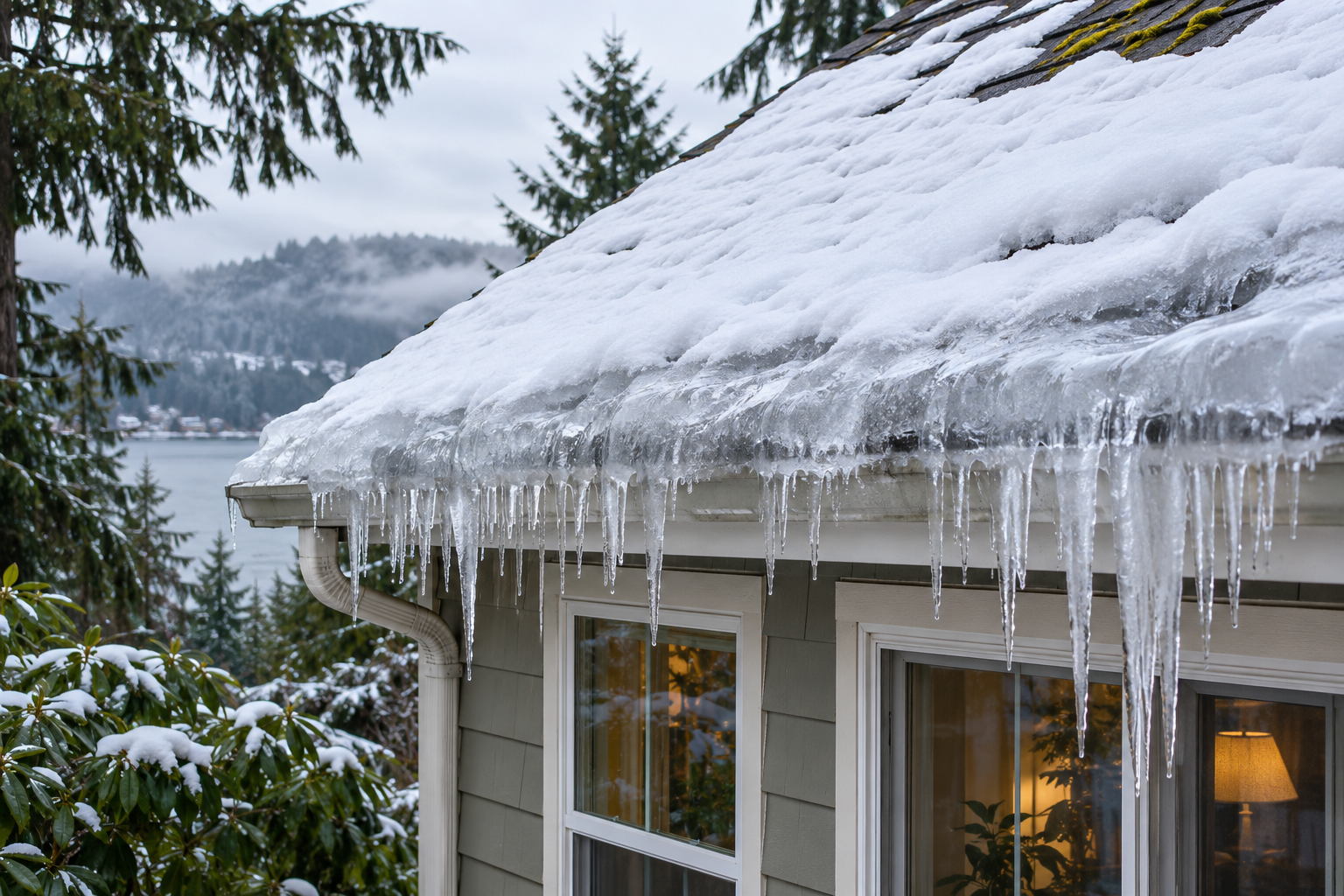
Ice dams on West Coast homes are caused by heat escaping from the house into the attic or roof, which melts the underside of the snow; that meltwater runs down to the colder eaves and refreezes, building a ridge of ice that traps more water behind it. According to the National Research Council of Canada, ice damming needs four things at once: snow on a sloping roof, outdoor temperatures below freezing, heat (from the house or the sun) to melt the snow, and a cold edge where ice can form. The biggest controllable factor is heat loss from the house, and research by the University of Minnesota Extension and Canada Mortgage and Housing Corporation (CMHC) points to air leakage into the attic as a major source.
Here's where that heat comes from, and what to look for in your own attic this winter.
How an ice dam forms
- Snow settles on the roof.
- Warmth reaching the roof deck melts the bottom layer of snow, even when it's below freezing outside.
- Meltwater runs down the roof under the snow.
- At the overhang, which sits outside the heated house and stays cold, the water refreezes.
- The ice ridge grows, and new meltwater pools behind it, where it can back up under shingles and leak indoors through the roof, walls or ceilings.
The University of Minnesota Extension sums it up: uneven roof surface temperatures cause ice dams, and the heat behind those uneven temperatures comes primarily from the house.
Where the heat comes from
Air leaks through the ceiling
Warm indoor air rises and escapes through gaps in the ceiling. The Minnesota Extension says that in many homes, heat loss by air leakage is the major mode of heat transfer leading to ice dams. CMHC's guide on attic venting, moisture and ice dams lists common leak paths:
- Plumbing stacks and chimneys where they pass through the attic floor.
- Gaps around chimneys and flues, especially in older houses.
- Openings above interior walls, split levels, rounded corners and stairwells.
- Places where an addition meets an older part of the house.
- Ceiling light fixtures and attic hatches.
Thin or patchy insulation
Heat also conducts through the ceiling. The NRC's building digest on ice on roofs notes that gaps or missing insulation where the wall meets the ceiling can let enough heat escape to keep melting snow right behind an ice dam. That junction is often hard to insulate because of the limited space under the roof slope.
Ducts, equipment and exhaust in the attic
CMHC notes that heating or air conditioning ducts and equipment in the attic can be a major source of air leakage and heat loss. The Minnesota Extension adds that poorly insulated or leaky ductwork, knee wall spaces and frequently used chimneys can all warm the attic. Bathroom or kitchen fans that vent into the attic instead of outside add both heat and moisture.
Blocked or poor ventilation
A ventilated attic helps keep the roof deck cold. Building Science Corporation's guidance for the US Department of Energy describes a simple vented attic, with an air-sealed ceiling, airflow from soffit vents to ridge vents protected by baffles, and plenty of insulation on the attic floor, as unlikely to encourage ice dams. Insulation stuffed against the soffits can block that airflow.
The sun
The NRC digest notes that sun can also melt roof snow or heat attic spaces. South-facing slopes clear faster, which can send meltwater toward colder, shaded sections and add to ice formation on north-facing slopes.
Quick attic check
| What to look for | What it suggests |
|---|---|
| Snow melting in patches while neighbours' roofs stay white | Heat escaping in those spots |
| Icicles concentrated over certain rooms | Air leaks or thin insulation below |
| Frost or dark staining on the underside of roof sheathing | Warm, moist air reaching the attic |
| Insulation darkened around pipes, wires or light fixtures | Air leaking through those openings |
| Bathroom fan duct ending in the attic | Moist, warm air ending up where it shouldn't |
| Insulation blocking soffit vents | Reduced ventilation at the eaves |
Fixing the cause, not just the ice
The University of Minnesota Extension recommends making the ceiling airtight first, then adding insulation to reduce conduction. It recommends against powered attic ventilators as an ice dam fix, warning they can create moisture problems and depressurize the house. It also suggests hiring a contractor who uses a blower door test and an infrared camera to find leaks.
Short-term relief, like carefully pulling snow off the lower roof edge from the ground, can help during a storm. But if ice dams return every time it snows, the attic is telling you where the heat is going.
Why ice dams can surprise coastal homeowners
In places where snow sits on roofs for months, ice dams show up every year and owners learn the signs. Where snow is occasional, a home can leak heat into its attic for years without anyone noticing, because there's rarely snow on the roof to reveal it. Then a snowfall followed by a cold spell arrives, and the problem appears all at once as icicles, stained ceilings or water at a window head. If that happens, note where the ice formed and which rooms sit below it. That map is the best starting point for an energy advisor or insulation contractor once the weather turns.
The bottom line
Ice dams are a heat-loss problem that shows up on the roof. Air leaks through the ceiling, thin insulation at the eaves, warm ducts and blocked ventilation are the usual causes. Seal and insulate from the attic side, keep the eaves ventilated, and the snow on your roof is far more likely to melt evenly instead of freezing at the edge.
Frequently asked questions
What causes ice dams on roofs?
Heat from the house melts the underside of roof snow, and the meltwater refreezes at the colder eaves. The NRC says ice dams need snow on a sloped roof, below-freezing outdoor air, a heat source and a cold edge.
Can ice dams happen in the Lower Mainland?
Yes. Any snowfall followed by below-freezing temperatures can produce ice dams on a home that leaks heat into the attic.
Does more attic insulation stop ice dams?
It helps, but the University of Minnesota Extension recommends air sealing the ceiling first, then adding insulation, because air leakage is often the bigger heat source.
Should I install a powered attic fan to prevent ice dams?
The University of Minnesota Extension doesn't recommend it, warning that mechanical attic ventilation can create moisture problems and depressurize the house.
Sources
- National Research Council Canada: Canadian Building Digest 89, Ice on roofs
- CMHC: About Your House, Attic venting, attic moisture and ice dams
- CMHC research report: Ice damming field research and solutions
- University of Minnesota Extension: Dealing with and preventing ice dams
- University of Minnesota Extension: What is an ice dam?
- Building America Solution Center: Ice dam prevention for roofs and attics